ENIT
Simulation examples

Steering Box (Runner System)

The study concerns a die cast aluminium alloy steering box, a structural component of about 1.6 kg that must be free from gas porosity. The die has no vacuum system: avoiding air entrapment from the very first filling stages is therefore essential.

1. Preliminary calculations

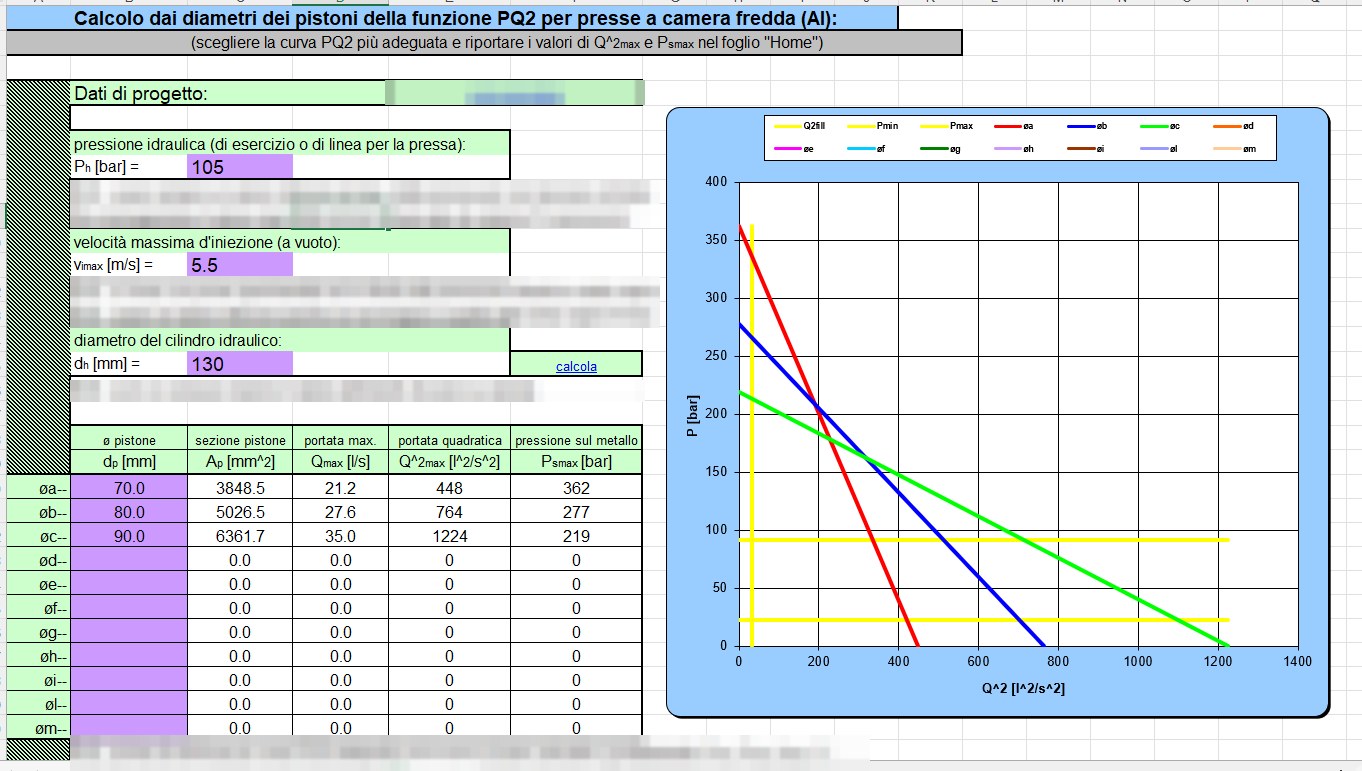
Before the simulation, the starting parameters were defined with the empirical NADCA formula and our calculation spreadsheets:

  • recommended filling time: 60–65 ms;
  • gate area: 400 mm² (increased from the calculated 350 mm², to reduce gate velocity and therefore porosity), thickness 3 mm;
  • second phase gate velocity: 20–25 m/s, above the limit of about 17 m/s to avoid jet filling;
  • 900 t machine, 77 mm plunger, shot sleeve fill ratio of about 67%;
  • first phase with increasing velocity profile, from 0.2 to 0.35 m/s.
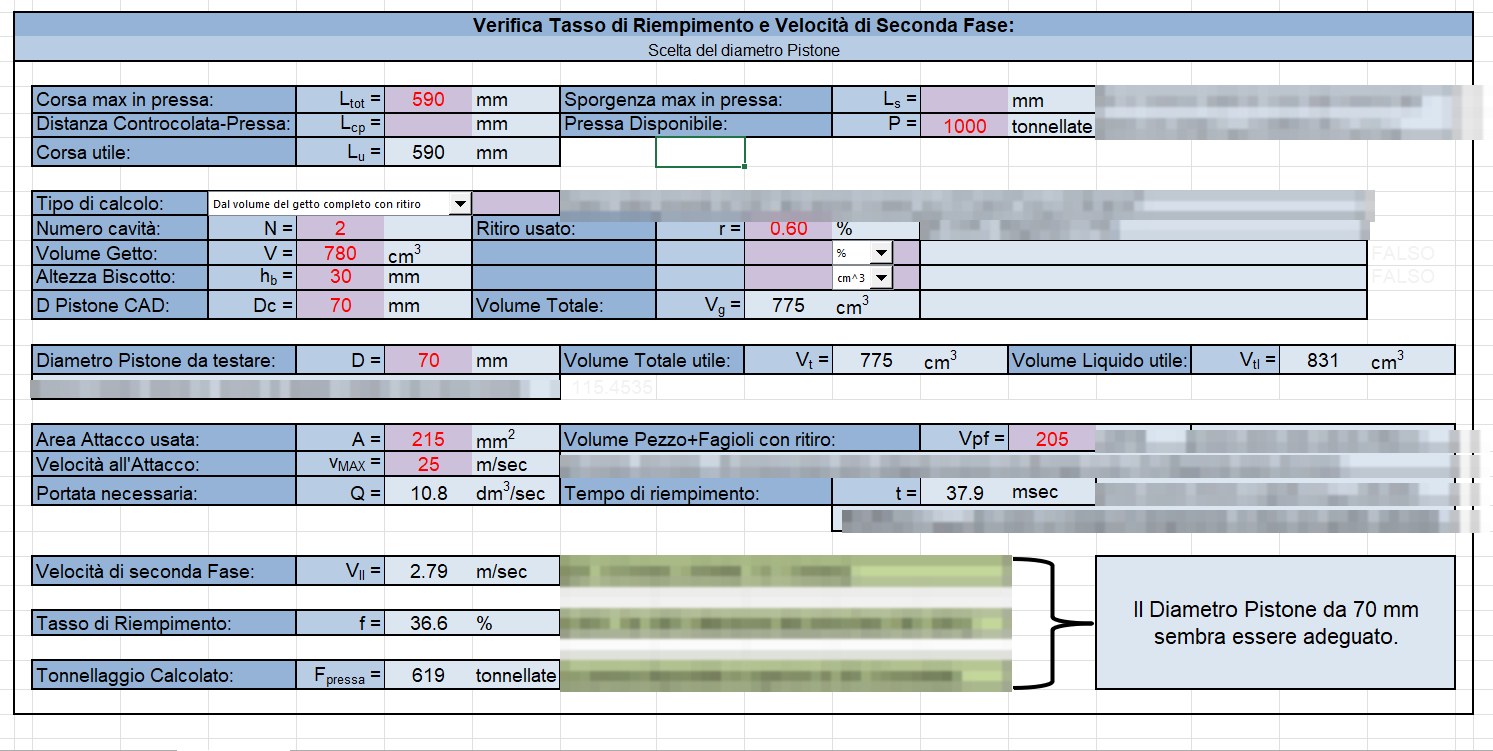
Preliminary calculations: shot sleeve fill ratio check and plunger selection with the PQ² diagram. Some parts are blurred for confidentiality.
Spreadsheet for checking shot sleeve fill ratio and second phase velocity in die castingPQ2 diagram spreadsheet for plunger selection in die casting

2. Initial geometry: single gate
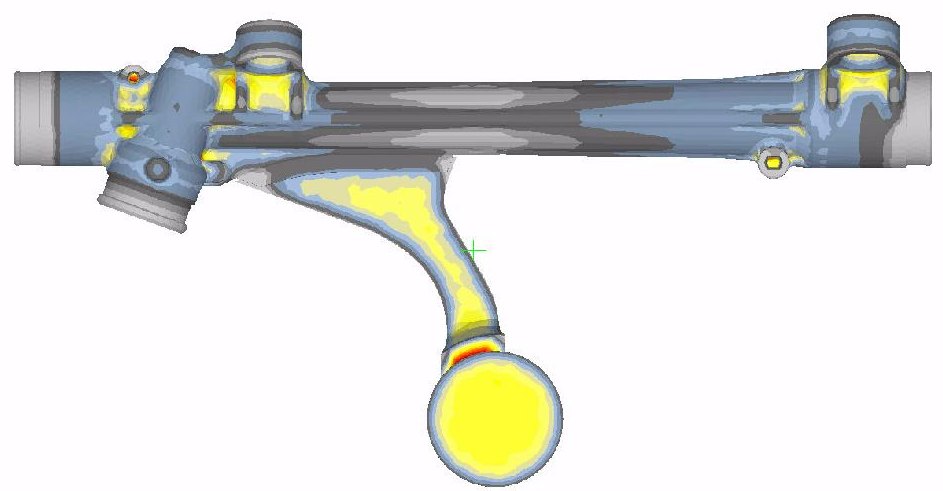
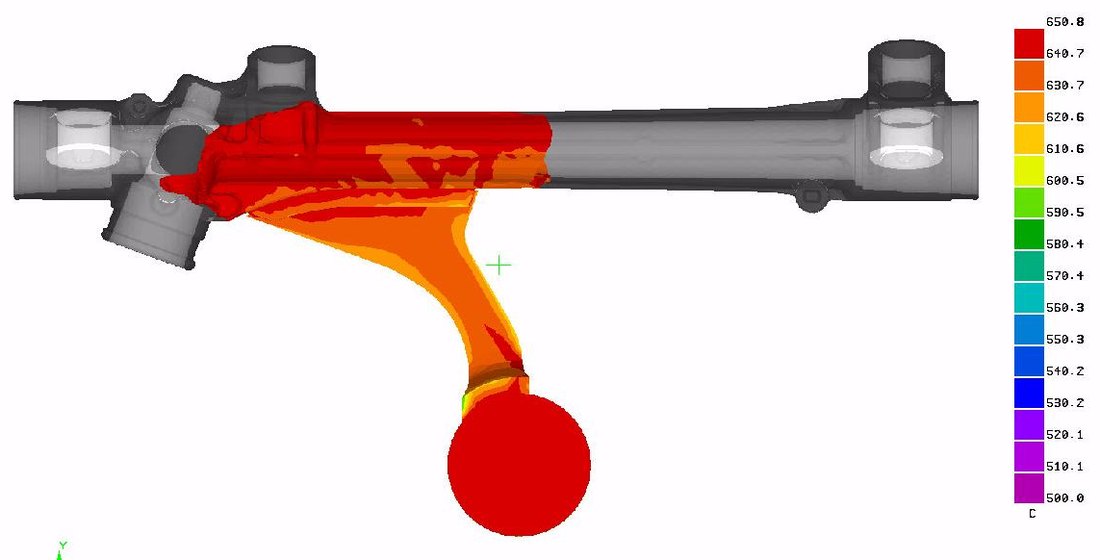
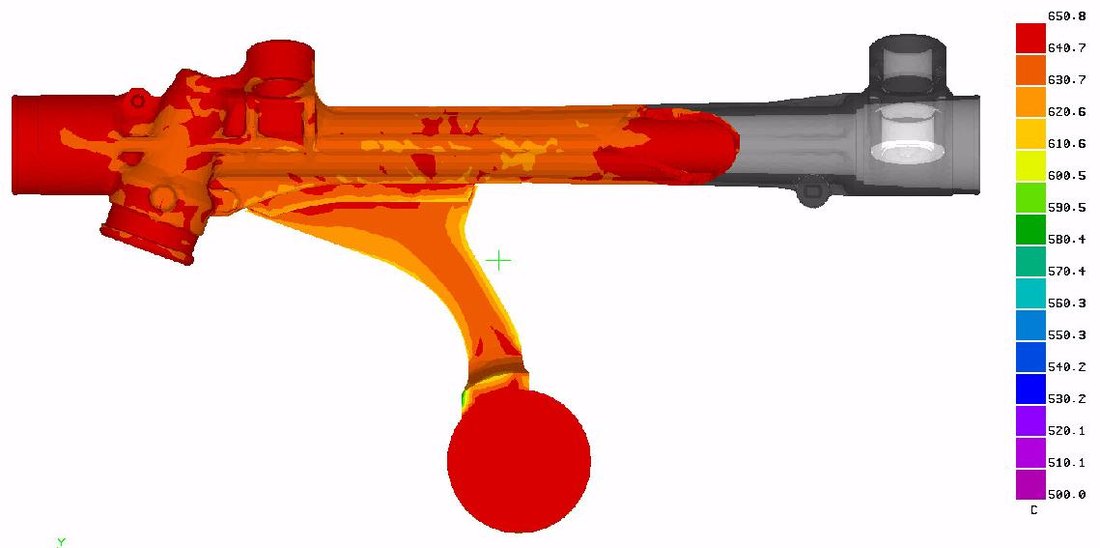
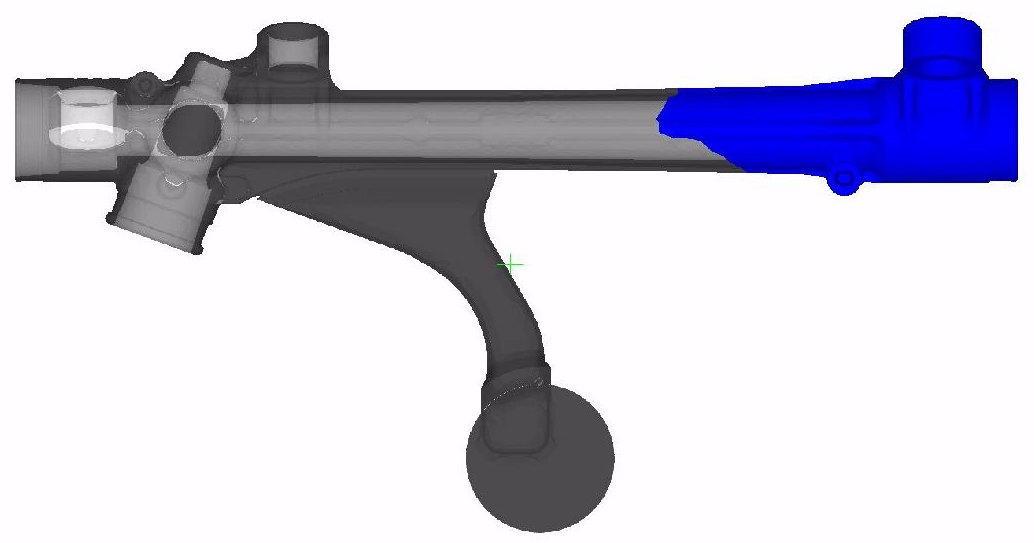
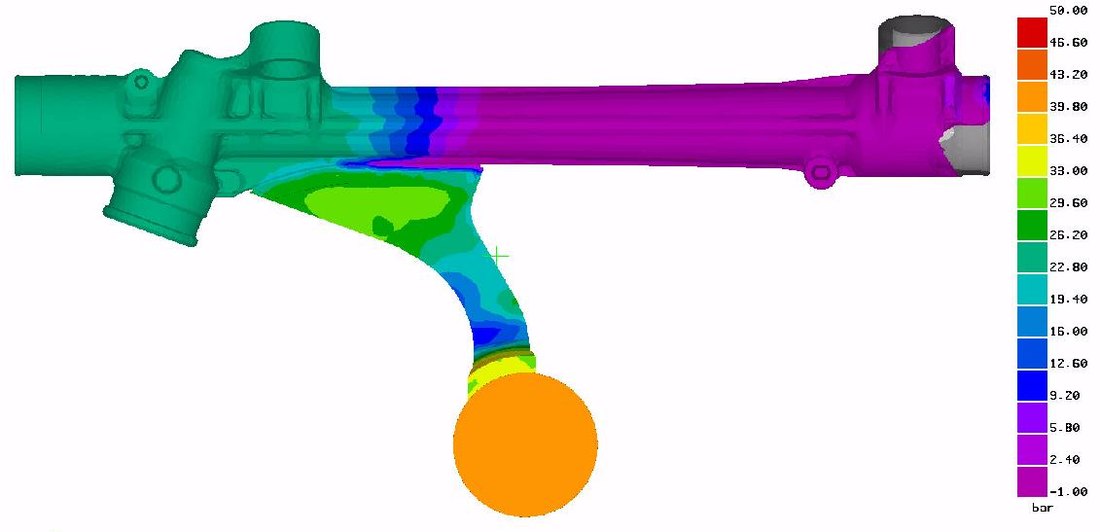
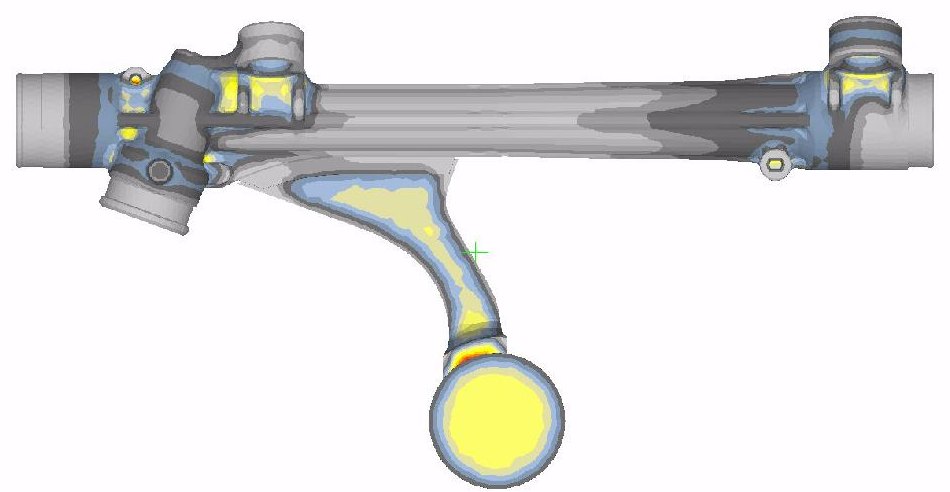
Temperature, air (in blue) and pressure. The metal fills first the massive area on the left, near the gate; the area on the right lags behind and is supported by lower pressures.
ProCAST die casting simulation of a steering box: temperature during filling, initial geometryProCAST steering box simulation: filling unbalanced to the leftProCAST steering box simulation: air during fillingProCAST steering box simulation: pressure during filling
Solidification (red = liquid metal). When the right area is cut off from the feed it still contains a lot of liquid metal, which will no longer be packed: risk of shrinkage porosity.
ProCAST steering box simulation: the right area is cut off from the feedProCAST steering box simulation: the area near the gate is cut off from the feed
ProCAST steering box simulation: velocity concentration at the gate
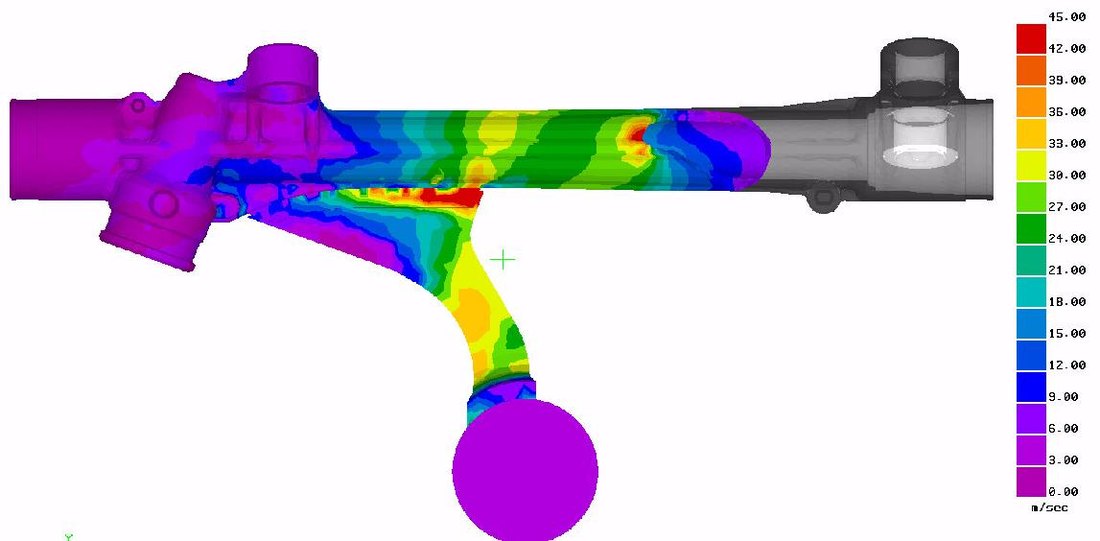
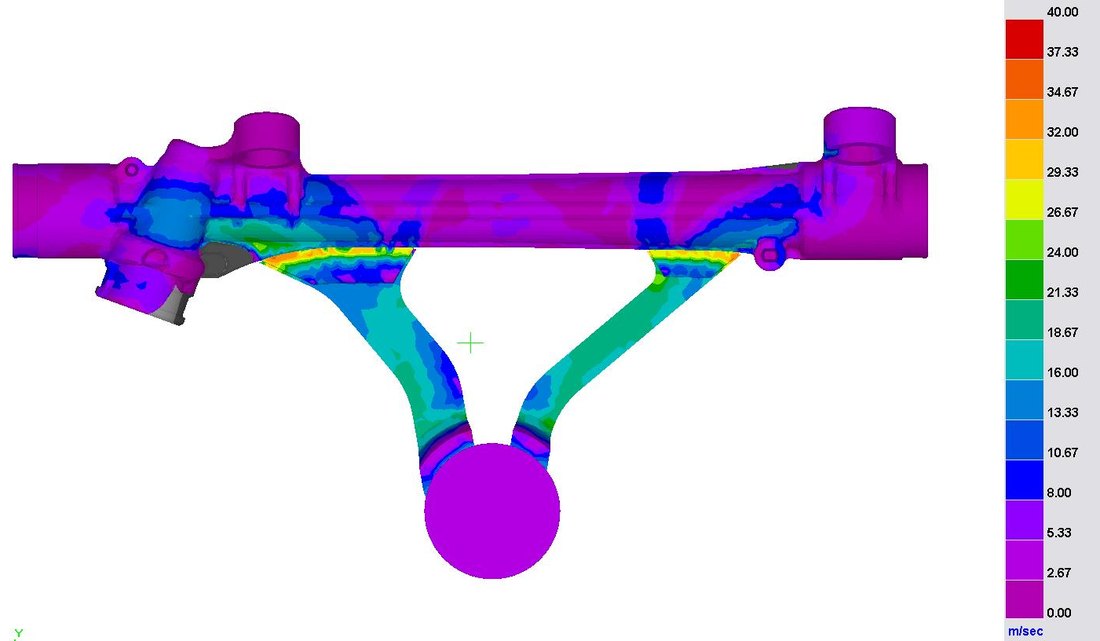
Velocity: once the left area is full, velocities concentrate on one part of the gate, with peaks that can cause early die wear.

3. Two solutions compared

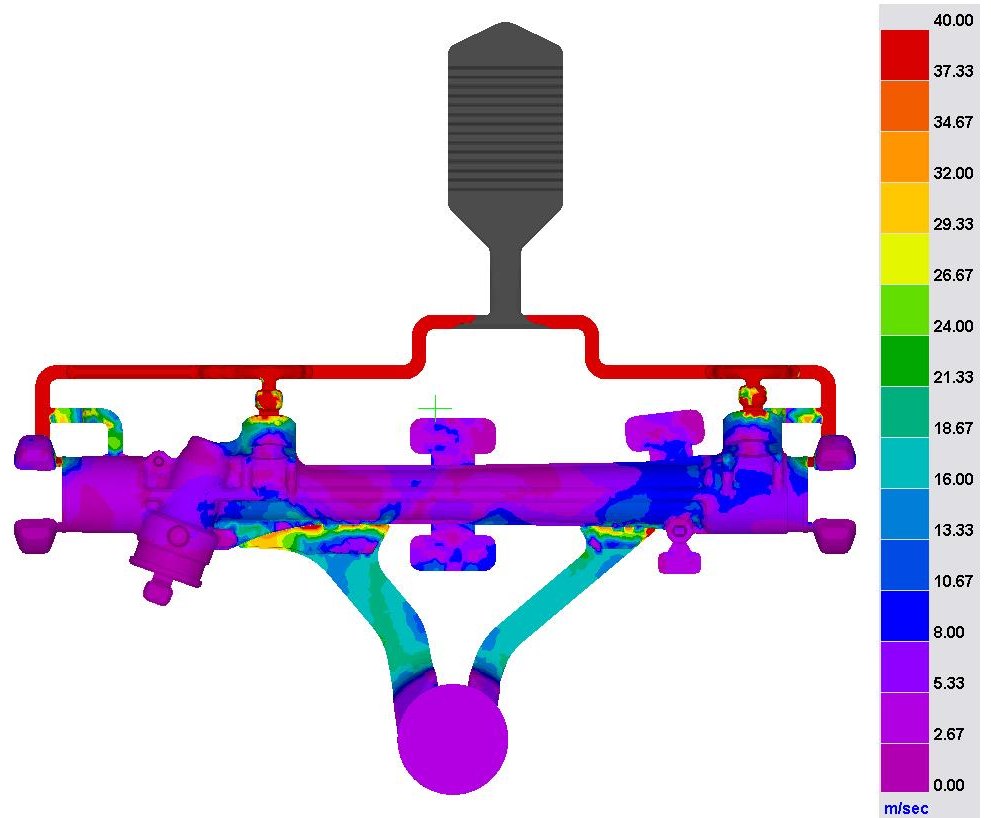
Two new runner layouts were simulated: the first optimises the single-gate runner, the second uses two separate runners to feed the two massive side areas.
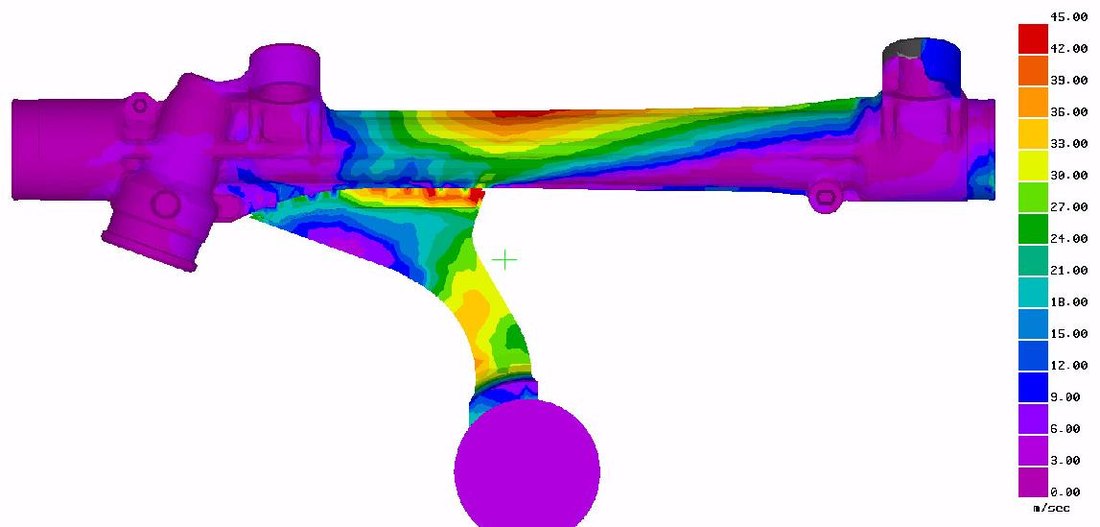
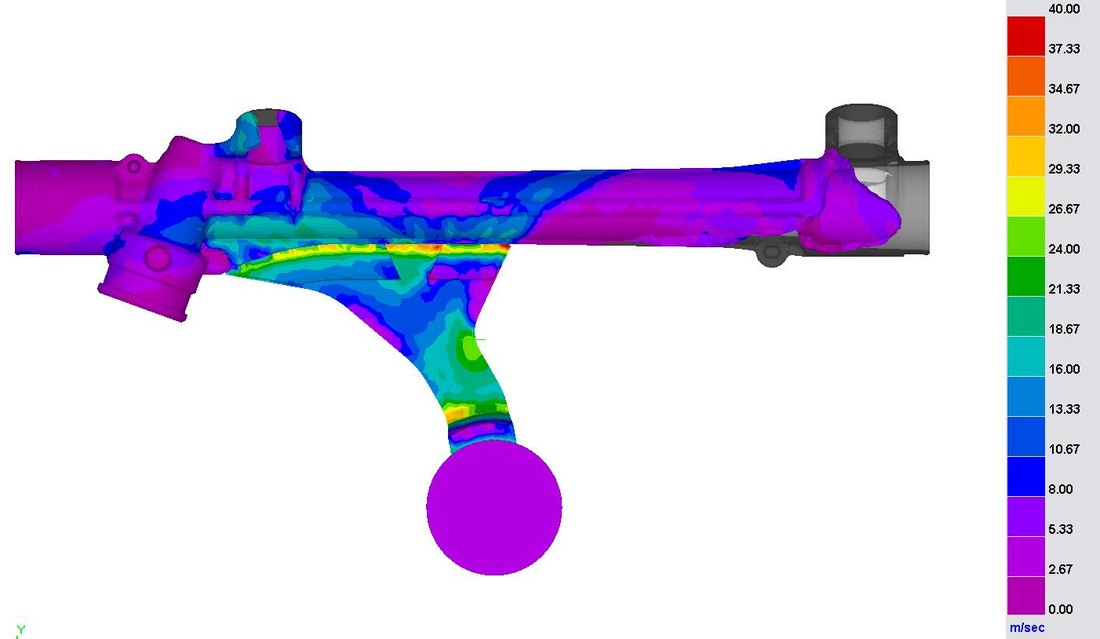
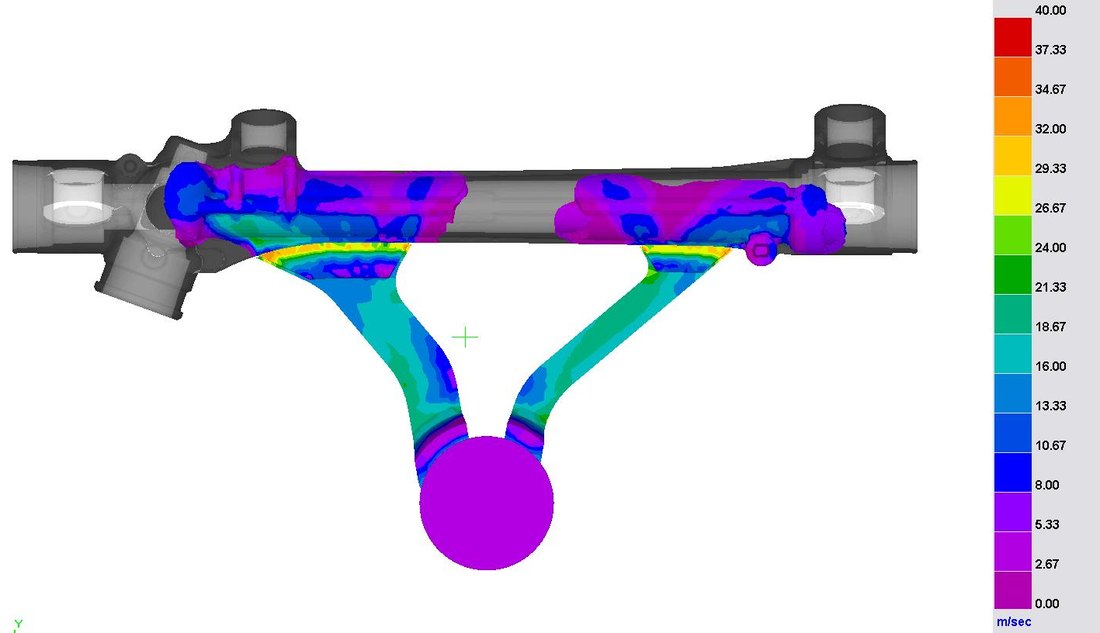
Velocity during filling. Top: first solution, much better balance and delayed, lower velocity peaks. Bottom: second solution, even more balanced filling.
ProCAST steering box simulation: first solution, better balanced fillingProCAST steering box simulation: first solution, gate velocityProCAST steering box simulation: second solution with double gateProCAST steering box simulation: second solution, air pocket near the left runner
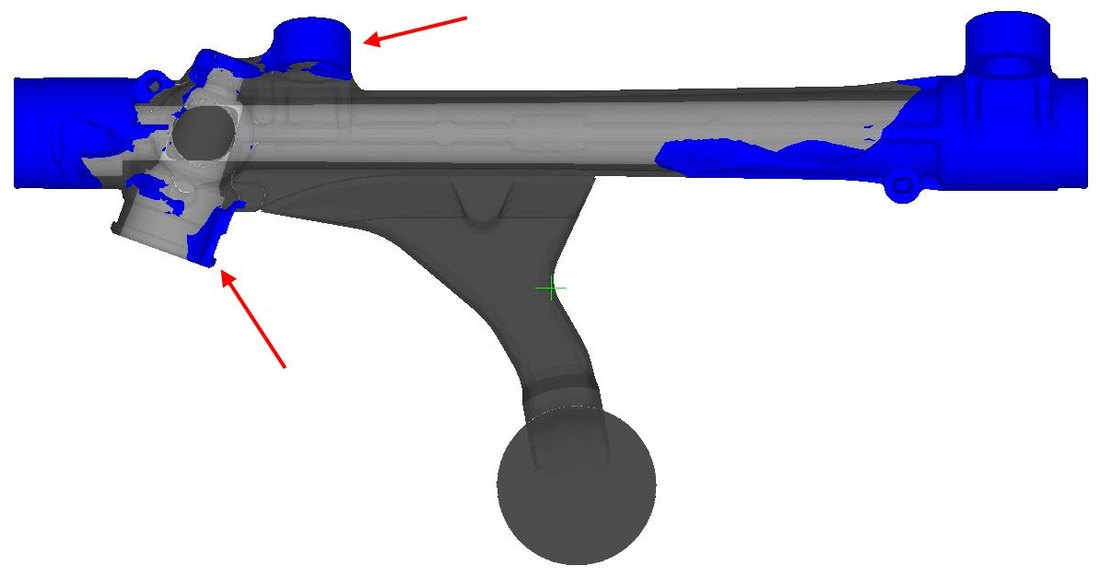
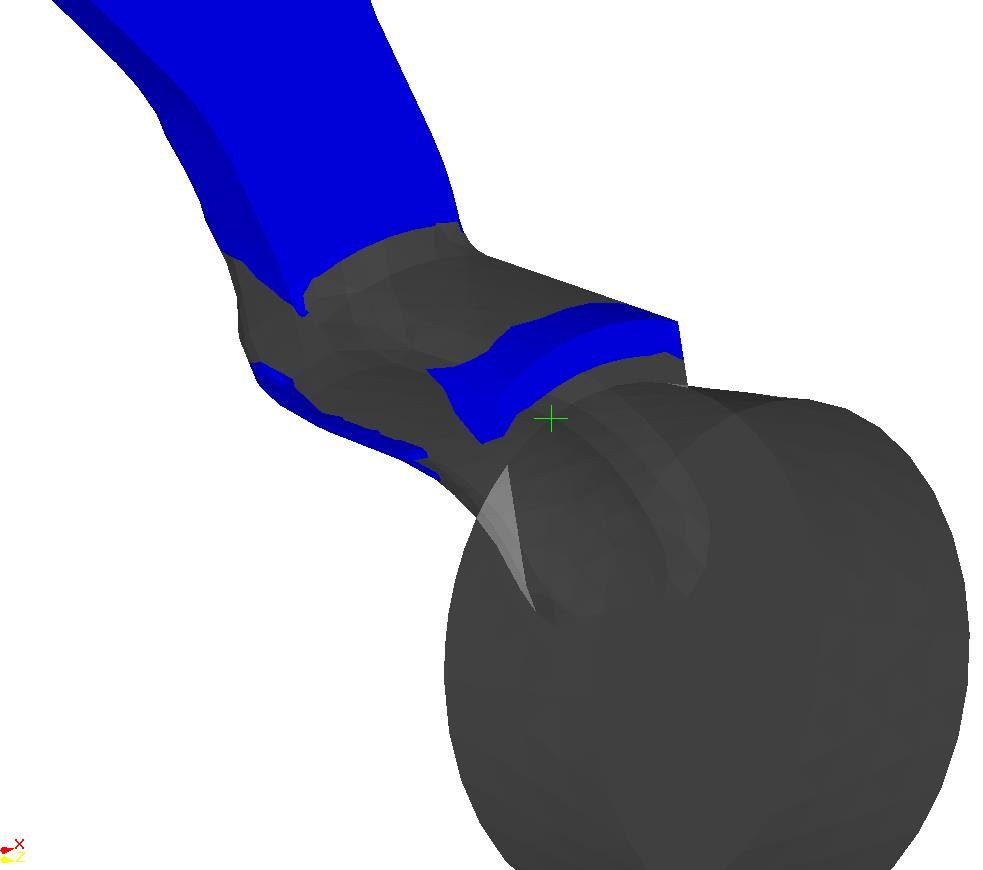
Air in the die. Arrows show the last areas to fill, where vents are needed; on the right an air pocket due to a missing fillet in the first runner section.
ProCAST steering box simulation: air venting areasProCAST steering box simulation: air pocket due to missing fillet in the runner
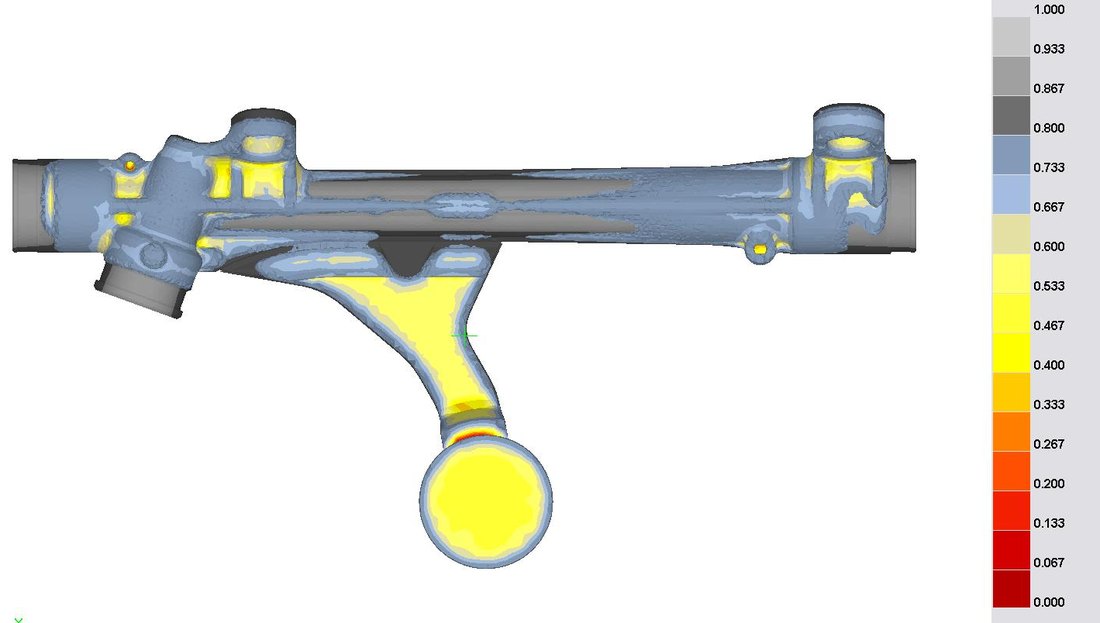
Packing. With the double gate (right) the right area of the part contains much less liquid metal when it is cut off from the feed: it is packed much better.
ProCAST steering box simulation: packing with single gateProCAST steering box simulation: packing with double gate

4. Final geometry

The double gate solution was chosen, completed with overflows, a chill vent system and the runner changes highlighted by the simulations.
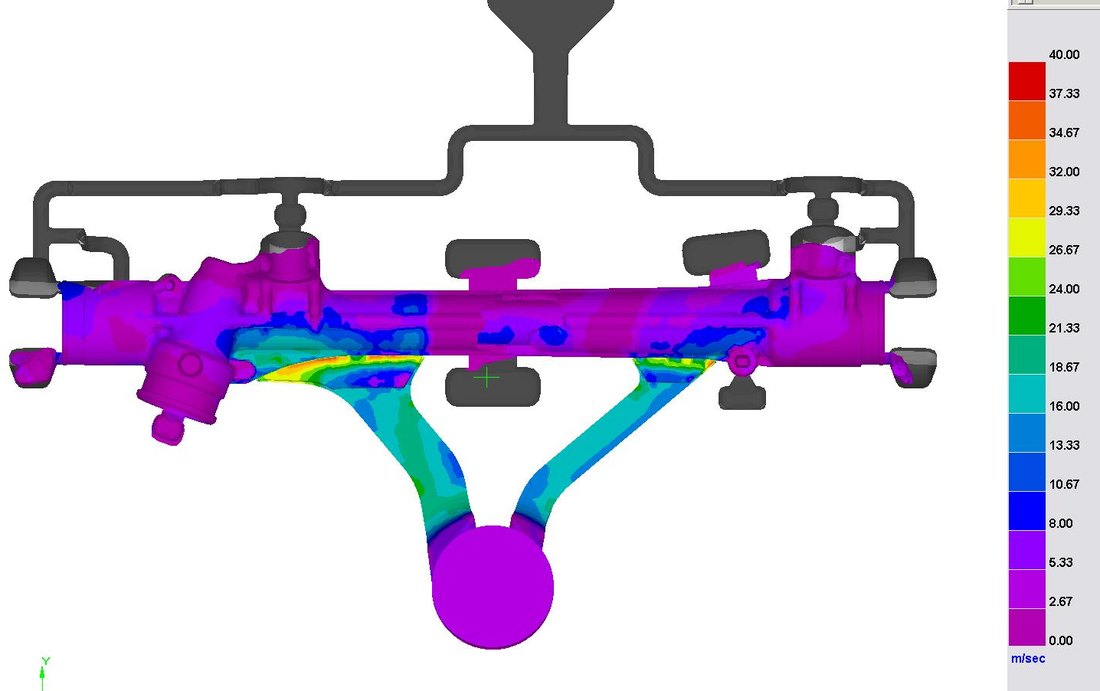
Final geometry. The two flow fronts reach the chill vent inlet almost at the same time; at the centre there is a difference of about 20 °C between the fronts, and the air gathers at the overflows.
ProCAST steering box simulation: final geometry, balanced fillingProCAST steering box simulation: the fronts reach the chill vent togetherProCAST steering box simulation: flow front temperaturesProCAST steering box simulation: air collected by the overflows

Starting from preliminary calculations and comparing several layouts in simulation, a runner system was obtained that balances filling, packs the massive areas better and drives the air where it can be vented, before the die is built.